
EPR Compliance Solutions to Simplify Extended Producer Responsibility Reporting
Simplify Packaging Compliance and Stay Ahead of Regulations
Navigating the complexities of EPR compliance, including state and international extended producer responsibility (EPR) laws, can be overwhelming. Clearyst° helps companies navigate evolving EPR laws with expert EPR consultants who provide the tools, guidance, and support you need to meet filing deadlines, avoid penalties, and optimize your packaging strategy. Our solutions streamline EPR reporting from data collection through submission, enabling you to stay compliant with US, Canada and international extended producer responsibility regulations, without the complexity.
What Is EPR? Understanding Extended Producer Responsibility Laws
Extended producer responsibility (EPR) is a regulatory framework that holds companies accountable for the environmental impact of what they produce, including packaging and textiles.
Key Requirements Under EPR
- Register with Producer Responsibility Organizations (PROs) in applicable jurisdictions
- Collect and report detailed packaging data
- Pay fees based on material types and recyclability

Why EPR Exists
- Shifts costs from taxpayers to producers
- Funds state-run recycling programs
- Improves waste-management systems and markets for recycled materials
“Clearyst° guided us every step of the way in the EPR process. From identifying requirements on a state-by-state basis to helping us collect required data, their expertise was invaluable.”
Saf-Gard
“Partnering with Clearyst° brought our teams together around shared goals: improving efficiency, ensuring compliance, and long-term planning for our clients.”
RecycleMe
Why Choose Clearyst° for EPR Compliance?
Comprehensive Global Coverage
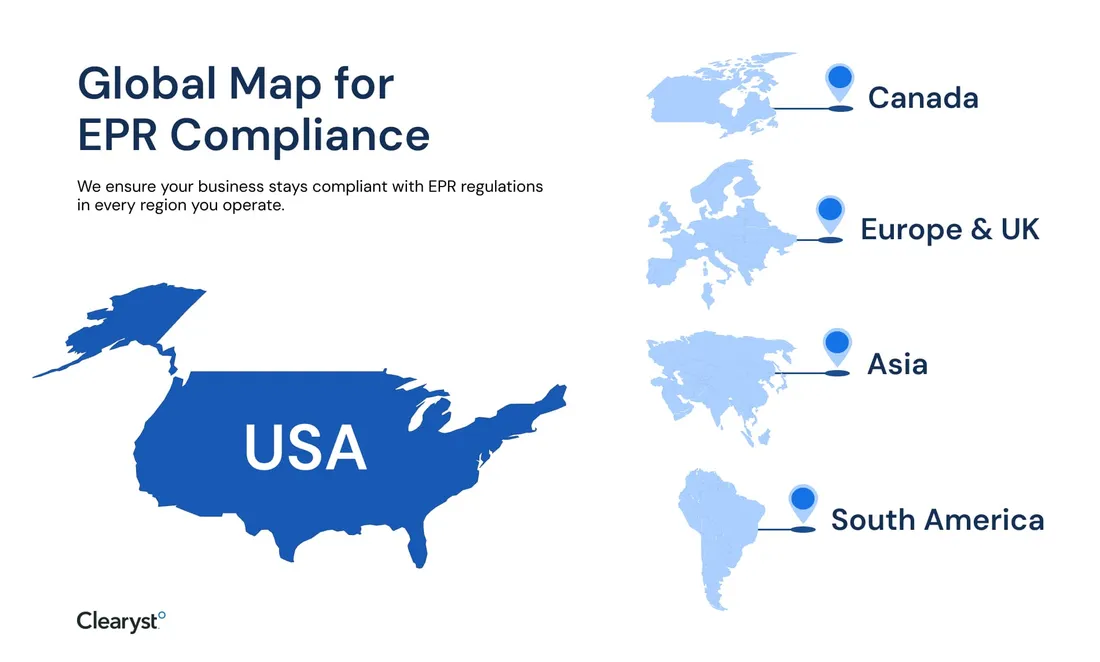
Our EPR data service supports EPR compliance across multiple U.S. states and global regions, including California, Colorado, Oregon, Canada's Federal Plastics Registry, Canadian Provincial EPR, the UK, Europe, Asia, Latin America, Africa and Oceania.
Streamlined EPR Data Management
Consolidate packaging data, identify reporting gaps, and generate accurate, jurisdiction-specific EPR reporting packages with ease.
Expert Guidance from EPR Consultants
Our advisors specialize in navigating complex and evolving extended producer responsibility laws, helping you avoid costly mistakes and optimize fees.
Supplier Engagement for Accurate Data Collection
Engage suppliers with automated data requests to ensure accurate and timely packaging data collection.
Future-Ready Compliance Support
Our team monitors evolving EPR regulations so your compliance program stays ahead of upcoming deadlines and requirements.
Packaging Innovation
Companies best positioned to succeed are those that treat EPR as a structured, ongoing process. They develop a strategy that includes not only compliance but competitive advantage and fee mitigation by optimizing packaging design and using fully circular materials (or more sustainable materials).
How It Works: EPR Compliance in 4 Steps
Clearyst° turns EPR compliance into a clear, repeatable process, from determining your obligations through submitting accurate reports on time.
Determining Obligation
Carefully reviewing and determining the applicability of each jurisdiction's law.
Track Deadlines
Monitor reporting schedules and regulatory updates for all relevant extended producer responsibility laws.
Compile Data
Collect and categorize packaging data, material types, weights, and recyclability, while identifying exemptions and opportunities to reduce future fees.
Submit Reports
Generate accurate, jurisdiction-specific EPR reporting documents and submit them on time to avoid penalties and maintain compliance.
Key Benefits of Clearyst°'s EPR Solutions
Save Time
Reduce internal workload with Clearyst°'s streamlined EPR compliance process.
Avoid Penalties
Prevent fines of up to $25,000/day with accurate, timely reporting.
Enhance Transparency
Gain full visibility into packaging data and compliance status.
Optimize Costs
Identify exemptions and optimize material categorization to lower future EPR fees.
Support Sustainability Goals
Align packaging strategy with broader ESG initiatives.
Industries We Support with EPR Compliance
Our EPR solutions are tailored to meet the needs of various industries, including:
Why Act Now? EPR Compliance Deadlines Are Approaching
Extended producer responsibility laws continue to expand across North America and globally. New programs introduce strict deadlines, extensive data requirements, and significant penalties for non-compliance. Acting early helps limit financial exposure and positions your business as a sustainability leader.
Frequently Asked Questions
What is Extended Producer Responsibility (EPR)?
EPR is a regulatory approach requiring producers to manage the lifecycle impact of their products, including take-back, recycling, and disposal. It aims to reduce environmental impact by encouraging sustainable product design and waste management.
Who does EPR apply to?
Manufacturers, importers, and brand owners who produce or sell products that generate waste, such as packaging.
Why is EPR important?
EPR reduces waste, conserves natural resources, and minimizes environmental pollution. EPR also promotes recycling and encourages companies to design more sustainable products, while funding recycling and waste-collection programs.
What are the key responsibilities under EPR?
Producers are responsible for collecting and recycling waste generated by their products, meeting government-mandated recycling targets, and submitting compliance reports to regulatory authorities.
How can companies comply with EPR regulations?
Compliance typically involves registering with relevant regulatory authorities, partnering with PROs or waste-management organizations, meeting recycling and collection targets, and submitting regular EPR compliance reports.
What happens if a company fails to comply with EPR regulations?
Non-compliance can result in penalties, fines, or legal action, depending on the jurisdiction. Some states impose fines up to $25,000 per day for non-compliance.
How does EPR benefit the environment?
EPR reduces waste in landfills, promotes recycling, conserves natural resources, and lowers greenhouse gas emissions by encouraging sustainable production and waste management practices.
Where can I find more information about EPR regulations in my region?
Contact one of our EPR consultants for detailed guidelines and guidance on EPR compliance for your industry and jurisdiction.
'%20style='fill:%231672E7;fill:color(display-p3%200.0863%200.4471%200.9059);fill-opacity:1;'/%3e%3c/svg%3e)
'%20style='fill:%231672E7;fill:color(display-p3%200.0863%200.4471%200.9059);fill-opacity:1;'/%3e%3c/g%3e%3c/svg%3e)
'%3e%3ccircle%20cx='499.808'%20cy='499.808'%20r='399.808'%20fill='%231672E7'%20style='fill:%231672E7;fill-opacity:1;'/%3e%3c/g%3e%3cdefs%3e%3cfilter%20id='filter0_f_0_54'%20x='0'%20y='0'%20width='999.615'%20height='999.615'%20filterUnits='userSpaceOnUse'%20color-interpolation-filters='sRGB'%3e%3cfeFlood%20flood-opacity='0'%20result='BackgroundImageFix'/%3e%3cfeBlend%20mode='normal'%20in='SourceGraphic'%20in2='BackgroundImageFix'%20result='shape'/%3e%3cfeGaussianBlur%20stdDeviation='50'%20result='effect1_foregroundBlur_0_54'/%3e%3c/filter%3e%3c/defs%3e%3c/svg%3e)

Ready to Simplify EPR Compliance?
Join the growing list of companies that trust Clearyst° to navigate EPR regulations with confidence. Let us help you turn compliance challenges into opportunities for growth and impact.