
Sustainable Procurement Strategy: Build the Guidelines, Choose the Right Materials, Reduce the Risk
A sustainable procurement strategy is a structured approach to integrating ESG criteria into purchasing decisions, from supplier selection to material choice, packaging specifications, and contract terms.
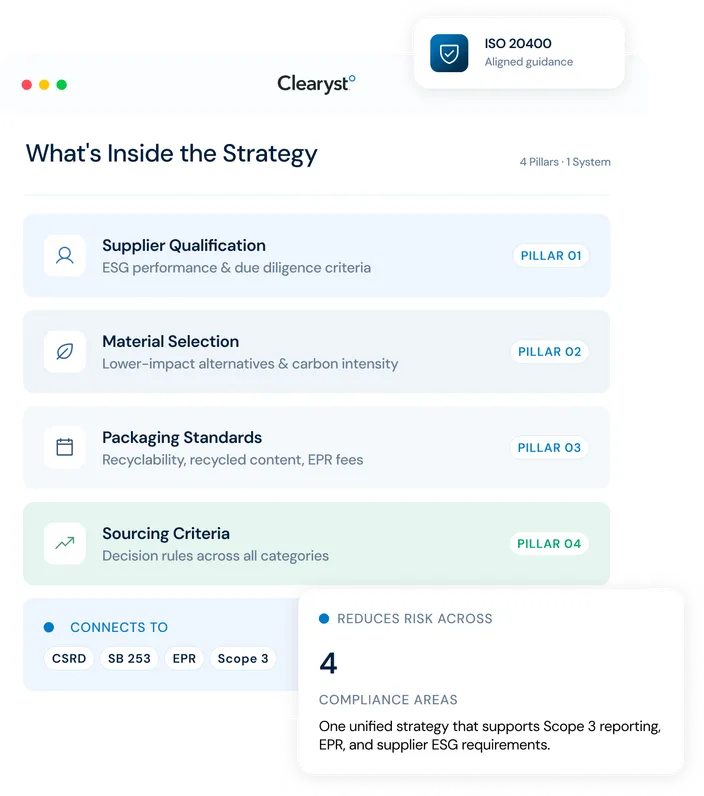
The Gap Between Goals and Execution
Most companies have sustainability goals. Few have translated those goals into the everyday decisions procurement teams make: what to buy, which new suppliers qualify, how to support existing suppliers to comply, how to make appropriate material selection changes, and how to weigh sustainability against cost, performance, and availability. Clearyst° helps companies make those decisions intentional, documented, and operational. That gap matters. Procurement decisions shape Scope 3 emissions, packaging compliance exposure, supplier risk, and product-level sustainability performance.
What Is a Sustainable Procurement Strategy?
A sustainable procurement strategy is a structured approach to integrating ESG criteria into purchasing decisions. It defines how suppliers, materials, packaging, and sourcing decisions should be evaluated so procurement supports sustainability goals, regulatory reporting, and business risk management.
Sustainable Sourcing vs. Sustainable Procurement
Sustainable sourcing focuses on where and how individual purchasing decisions are made. Sustainable procurement is broader: it sets the criteria, policies, and standards that guide sourcing decisions across the entire business.
| Sustainable Sourcing | Sustainable Procurement | |
|---|---|---|
| Key Question | "Where should we buy this from?" | "What standards should guide how we buy across the business?" |
| Focus | Specific materials, goods, or services, the supplier and origin selection for individual purchasing decisions. | Broader scope: sourcing criteria, procurement policies, supplier qualification, contract standards, and internal guidelines across all categories. |
Why Procurement Drives Scope 3
Scope 3 Category 1, purchased goods and services, is often one of the largest contributors to a company's total GHG footprint, and one of the areas most directly shaped by procurement. The suppliers a company qualifies, the materials it buys, the packaging it specifies, and the contracts it writes determine whether sustainability commitments become measurable business action. Sustainable procurement also supports EPR compliance, product carbon footprint reduction, CSRD reporting, supplier risk management, and EcoVadis performance.
Business Drivers
Scope 3 Reporting Requirements
Companies reporting under CSRD, SB 253 and other disclosure frameworks need better data on what they buy, who they buy from and the emissions intensity of purchased goods and services. Procurement guidelines make that data collection part of the sourcing process instead of a separate reporting scramble.
EPR Packaging Compliance
Material choices, recyclability, recycled content, and supplier specifications can affect compliance obligations and fees. Sustainable packaging procurement helps companies move from reactive compliance to proactive material planning.
Customer & Supplier Qualification Requirements
Enterprise buyers increasingly evaluate suppliers on sustainability performance. EcoVadis ratings, CDP responses, supplier scorecards, and ESG questionnaires are becoming part of qualification and contract renewal.
Supply Chain Risk & Regulatory Exposure
Regulations such as the EU Deforestation Regulation and CBAM are raising expectations for traceability, embedded carbon data, and supplier due diligence, alongside climate disruption and geopolitical risk.
The Clearyst° Approach
A structured path from a procurement baseline to supplier scorecards, so sustainability criteria become part of everyday purchasing decisions.
Procurement Baseline Assessment
Map purchasing categories, key suppliers, material inputs, and current data gaps. Identify where environmental, regulatory, and cost risks are concentrated.
Procurement Guidelines & Policy Development
Develop category-level sustainable procurement guidelines that define acceptable materials, supplier criteria, sourcing expectations, and decision rules.
Product & Packaging Material Review
Assess current materials and packaging against recyclability, recycled content, carbon intensity, cost, availability, and regulatory requirements.
Supplier Qualification & Scorecard Design
Build supplier screening criteria, scorecards, EcoVadis integration, and monitoring processes so procurement teams can evaluate suppliers consistently.
Consulting Services
Sustainable Procurement Guidelines Development
Clearyst° develops procurement guidelines that define how sustainability criteria should be applied across categories and suppliers.
- Category-level purchasing criteria
- Supplier sustainability requirements
- Material and packaging standards
- RFP and supplier selection guidance

Without procurement guidelines, sustainability goals rarely change purchasing behavior. With them, teams have a consistent way to make better decisions.
Product & Packaging Material Assessment and Modification
Material and packaging choices affect cost, compliance, product claims, emissions, and customer acceptance.
- Recyclability and recycled content
- EPR compliance requirements
- Carbon intensity
- Cost and supply chain continuity
Helps procurement teams prioritize the changes that reduce risk and environmental impact without creating unnecessary disruption.
Sustainable Sourcing Criteria & Supplier Qualification
Supplier qualification is where procurement sustainability becomes scalable.
- Supplier prequalification criteria
- Sustainability scorecards
- Due diligence standards
- Supplier improvement pathways
Gives procurement teams a structured way to assess new and existing suppliers, prioritize engagement, and improve supply chain ESG performance over time.
Scope 3 Category 1 Data Collection & Reporting Integration
Sustainable procurement is directly connected to Scope 3 reporting. Purchased goods and services data often comes from procurement systems, supplier records, and category managers.
- Supplier emissions data requests
- Spend-based and activity-based data mapping
- Emission factor alignment
- Reporting handoffs to sustainability teams
A procurement process that supports both better buying decisions and more accurate emissions reporting.
Frequently Asked Questions
What is a sustainable procurement strategy?
A structured approach to integrating ESG criteria into purchasing decisions. It defines how suppliers, materials, packaging and sourcing decisions should be evaluated so procurement supports sustainability goals, reporting obligations and business risk management.
How does sustainable procurement reduce Scope 3 emissions?
Procurement influences Scope 3 Category 1 emissions by determining which goods, materials and suppliers a company uses. Sustainable procurement reduces emissions by prioritizing lower-carbon materials, improving supplier data collection, and selecting better-performing suppliers.
What should sustainable procurement guidelines include?
Supplier qualification criteria, material requirements, packaging standards, ESG data expectations, sourcing decision rules and governance for how sustainability is evaluated during RFPs, onboarding and contract renewals.
What is ISO 20400?
ISO 20400 is the international guidance standard for sustainable procurement. It is not a certification standard, but it provides a useful framework for integrating sustainability into procurement policies, processes and supplier relationships.
How does sustainable procurement relate to EPR packaging compliance?
EPR compliance often depends on packaging decisions made by procurement teams. Material selection, recyclability, recycled content and supplier specifications can affect fees and reporting obligations.
How do I qualify suppliers on sustainability criteria?
Supplier qualification typically includes ESG performance thresholds, EcoVadis or CDP requirements, supplier questionnaires, risk tiering, scorecards and ongoing performance tracking.
'%20style='fill:%231672E7;fill:color(display-p3%200.0863%200.4471%200.9059);fill-opacity:1;'/%3e%3c/svg%3e)
'%20style='fill:%231672E7;fill:color(display-p3%200.0863%200.4471%200.9059);fill-opacity:1;'/%3e%3c/g%3e%3c/svg%3e)
'%3e%3ccircle%20cx='499.808'%20cy='499.808'%20r='399.808'%20fill='%231672E7'%20style='fill:%231672E7;fill-opacity:1;'/%3e%3c/g%3e%3cdefs%3e%3cfilter%20id='filter0_f_0_54'%20x='0'%20y='0'%20width='999.615'%20height='999.615'%20filterUnits='userSpaceOnUse'%20color-interpolation-filters='sRGB'%3e%3cfeFlood%20flood-opacity='0'%20result='BackgroundImageFix'/%3e%3cfeBlend%20mode='normal'%20in='SourceGraphic'%20in2='BackgroundImageFix'%20result='shape'/%3e%3cfeGaussianBlur%20stdDeviation='50'%20result='effect1_foregroundBlur_0_54'/%3e%3c/filter%3e%3c/defs%3e%3c/svg%3e)

Ready to Build a Procurement Program That Reduces Risk, Cost and Emissions?
Your procurement decisions are already shaping your Scope 3 footprint, EPR compliance exposure, supplier risk and product sustainability performance. Clearyst° helps make those decisions intentional.
The goal is not more policy. It is better purchasing decisions, backed by clear criteria and measurable outcomes. See All Sustainability Services →